
Beyond a Reasonable Doubt - podcast by Davidhorn

Beyond a Reasonable Doubt - podcast by Davidhorn

por Davidhorn
Temporada 3
The Art and Science of Child Interviewing with Triangle
In this episode, we speak with Carly McAuley and Maxime Cole from Triangle, a UK-based organisation specialising in investigative interviewing of children and vulnerable adults. Carly McAuley and Maxime Cole shared with us Triangle's approach to investigative interviewing with children and vulnerable adults. The conversation explores how very young children - even two and three-year-olds - can provide reliable, court-admissible evidence when interviewed using appropriate techniques. Triangle's expertise challenges long-held assumptions about children's capabilities and demonstrates that the quality of evidence obtained depends entirely on the adult interviewer's communication skills, not the child's inherent abilities.
Temporada 2
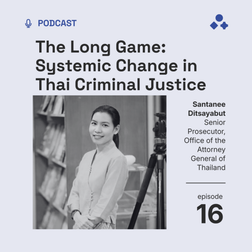
The Long Game: Systemic Change in Thai Criminal Justice
What does it take to implement investigative interviewing across an entire nation's criminal justice system? In this episode, recorded in Hua Hin, Thailand, Dr Ivar Fahsing speaks with Ms. Santanee Ditsayabut — senior prosecutor at the Office of the Attorney General of Thailand and Director of the Secretariat of the Nitivajra Institute — about Thailand's landmark efforts to embed ethical, evidence-based interviewing practices across its justice system. Santanee shares the story of Thailand's PEACE Program Informity: a multi-year, multi-agency initiative bringing together prosecutors, police, special investigators from the DSI, judges, and officers from across government. She speaks candidly about the challenges of changing practitioner mindset, overcoming the myth that investigative interviewing is too time-consuming, and the critical role of policy-level support in sustaining real change. The conversation explores how Thai cultural values of respect and dignity align naturally with the ethos of ethical interviewing — and how understanding memory science and cognitive bias transforms the way practitioners approach evidence gathering. Santanee also discusses the important role of judges in evaluating evidence accurately, and why legislative reform may be needed to support long-term implementation. The episode marks a historic milestone: Thailand is certifying its first national PEACE trainers and champions, positioning the country as a leader in investigative interviewing across Asia. In this episode: Thailand's PEACE Program Informity and how it brings the full justice chain together Why investigative interviewing must be understood as a skill, not a theory Confirmation bias, tunnel vision, and the science of memory The role of judges in evidence evaluation — and what happens when they lack that knowledge Building sustainable change by training future policymakers alongside practitioners How technology, including recording and AI transcription, supports implementation Thailand certifying its first national PEACE trainers Beyond a Reasonable Doubt is the podcast from Davidhorn, exploring investigative interviewing and digital evidence with experts from around the world.
Temporada 1
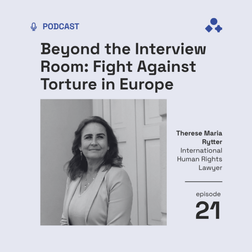
The Long Game: Beyond the Interview Room. Fight Against Torture in Europe
In this episode of Beyond a Reasonable Doubt, host Dr Ivar Fahsing speaks with Therese Maria Rytter, international human rights lawyer and outgoing Vice-President of the European Committee for the Prevention of Torture (CPT), about the critical intersection of legal safeguards, investigative interviewing, and the prevention of torture across Europe. After nearly 12 years with the CPT and 30 years dedicated to protecting human rights internationally, Ms Rytter brings unparalleled insight into what actually prevents torture and ill-treatment in police custody, prisons, and other detention settings across the 46 member states of the Council of Europe. As Director of Prevention and Accountability at DIGNITY – Danish Institute Against Torture, and co-author of the landmark Mendez Principles on Effective Interviewing for Investigations and Information Gathering, she represents the bridge between international human rights standards and practical implementation in criminal justice systems. The conversation reveals the CPT's unique and powerful mandate: conducting surprise visits to police stations, prisons, and psychiatric hospitals throughout Europe, sometimes arriving at midnight on Friday nights when cells are fullest. Therese Maria Rytter describes how expert delegations - including lawyers, forensic doctors, psychiatrists, and former police commissioners - spend two weeks in each country, sitting inside cells to speak with detainees, examining injuries, reviewing CCTV footage, and assessing use-of-force records. This unprecedented access allows the CPT to make concrete, evidence-based recommendations tailored to each country's specific context.
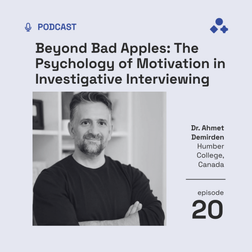
The Long Game: Beyond Bad Apples. The Psychology of Motivation in Investigative Interviewing
What shapes an investigator's mindset — and does it matter more than their training? In this episode, Dr. Ivar Fahsing speaks with Ahmet Demirden, criminal justice academic and former Toronto Police Service officer, about the psychology behind investigative interviewing practice. Drawing on two decades of experience across Canada, Turkey, and international training contexts, Ahmet Demirden introduces regulatory focus theory as a lens for understanding why officers interview the way they do — and why knowledge alone is rarely enough to change behaviour. The conversation covers the gap between training and performance, the role of organisational culture and required drivers, the legal complexities of the Turkish inquisitorial system, and the emerging potential of AI and simulation technology to provide the feedback mechanisms that policing has long lacked.
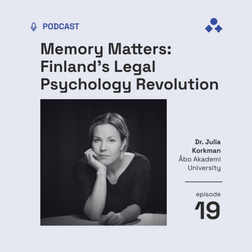
The Long Game: Memory Matters. Finland's Legal Psychology Revolution
Dr Ivar Fahsing speaks with Dr Julia Korkman — psychologist, researcher, and one of the leading voices in legal psychology in the Nordic region — about what investigative interviewing looks like in Finland: what works, what doesn't, and why the gaps matter. In this episode: - Why human memory is the core material of criminal justice — and why so few professionals are trained in it - How the desire to help children speak can introduce the very errors it's meant to prevent - The Kailinna wrongful conviction case and the cost of confirmation bias - Cultural humility in cross-border and multilingual interviews — from Finland's sauna culture to collective societies in Southeast Asia - What a nationwide survey of Finnish police officers revealed about knowledge of interviewing methods - Why Norway's shift to recording succeeded — and what Finland can learn from it - How AI is being used to generate alternative hypotheses in child abuse investigations - Remote hearings, automated transcription, and the future of technology in investigative interviewing Guest: Dr Julia Korkman, Docent in Psychology, Åbo Akademi University Host: Dr Ivar Fahsing
Bridging Research and Practice of the Interview Room
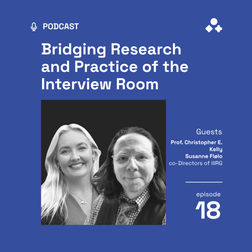
Every major interviewing framework - PEACE, KREATIV, ORBIT - distils to the same essentials: stay nice, ask good questions, and listen. So why does confession-driven culture remain so deeply embedded, even in systems that have formally adopted investigative interviewing? In this episode of Beyond a Reasonable Doubt, host Børge Hansen speaks with two leading members of iIIRG - the International Investigative Interviewing Research Group - about what actually makes reform stick, and what keeps pulling it back.
The Long Game: Technology, Training, Top Management and Good Intentions
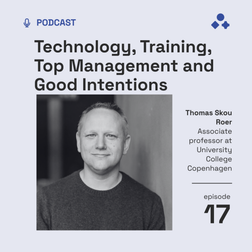
Denmark implemented investigative interviewing standards in 2015, yet officers were convicted of coercion in 2021. Thomas Skou Roer reveals why and what's next. In this candid and thought-provoking episode of Beyond a Reasonable Doubt, host Ivar Fahsing speaks with Thomas Skou Roer, associate professor at University College Copenhagen and former Danish criminal detective with 18 years of service, about the complex realities of implementing investigative interviewing standards in Denmark—and why having good standards doesn't guarantee good practice.
Innovation and AI in Norwegian Police
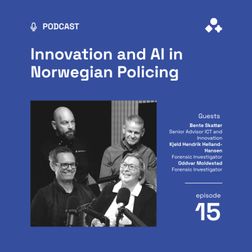
Discover how Norwegian police are transforming investigative work through innovation and artificial intelligence. Join host Børge Hansen (CEO, Davidhorn) in conversation with three experts from Norway's law enforcement community: Kjeld Hendrik Helland-Hansen and Oddvar Moldestad (Forensic Investigators, Western Police District) and Bente Skattør (Senior Advisor ICT and Innovation, Norwegian Police). This episode examines the integration of AI in investigative interviewing, advances in crime scene investigations, and the critical importance of accountability when deploying AI tools. The speakers discuss challenges in keeping pace with criminal innovation, the necessity for operational efficiency, and how international collaboration strengthens policing practices. They also address the cultural shift required within police organisations to embrace innovation while navigating bureaucratic complexities.
PEACE and Orbit - a conversation with Prof. Laurence Alison

Explícito
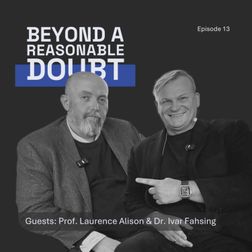
** LIVE at Davidhorn Police Interview Summit 2025 ** This conversation explores the nuances of interviewing techniques in law enforcement, focusing on the Orbit model and its relationship with the PEACE model. Prof. Laurence Alison and Dr. Ivar Fahsing discuss the importance of evidence-based practices, cultural influences on police interviewing, and the evolution of techniques over time. They reflect on their early careers and the challenges faced in implementing effective interviewing strategies across different countries. This conversation delves into the evolution of investigative psychology, focusing on decision-making processes within law enforcement, the importance of training and certification for detectives, and the potential role of technology and AI in enhancing interviewing techniques. The speakers reflect on their experiences and research, emphasising the need for better systems and training to improve investigative outcomes.
The Barnahus Revolution: How a Small Nation Changed Child Protection Forever
This conversation explores the development and impact of the Barnahus model in Iceland, a pioneering approach to child protection and justice for victims of sexual abuse. Bragi Guðbrandsson shares insights from his 25-year involvement in establishing Barnahus, detailing the challenges faced in the Icelandic child protection system, the innovative solutions implemented, and the model's influence on child advocacy across Europe.
1 de 3