Behind the Commit

Behind the Commit

por Mia Bajić
The Best of Two Languages: Connecting C++ & Python with Cristián Maureira-Fredes
Trailer
What does a PhD in Astrophysics have in common with the software running in your car, your coffee machine, and NASA’s internal tools? In this episode I sit down with Cristian Maureira-Fredes, a Research and Development Principal Manager at The Qt Company. Cristian leads the team behind Qt for Python (PySide6) and the Qt Core team.
Inside PyPI: Maria Ashna on Supporting Python's Package Index
In this episode, I'm chatting with Maria Ashna — PyPI support specialist at the Python Software Foundation and founder of Magic Lightbulb, a tech and product consulting firm. PyPI serves nearly a million developers and is the backbone of Python's entire package ecosystem — maintained by a team of just four people. Maria shares what her role actually looks like day to day, how she cleared a backlog that was delayed by over a year, what happens when a package maintainer passes away, and what's coming next for PyPI organizations. Outline 0:00 Episode highlights 0:45 Introduction to Maria Ashna 1:11 What does a PyPI support specialist actually do? 2:07 The history of PyPI — born in 2003, formerly "the cheese shop" 2:47 How many people work on PyPI? 3:27 Most common support issues: account recovery and 2FA 3:48 2FA is now 100% mandatory on PyPI 4:10 Clearing a 500+ ticket backlog delayed by over a year 6:14 What is PEP 541? 7:01 What happens when users don't respond? 8:07 The edge case nobody thinks about: users who have passed away 8:30 How to open a ticket with the PyPI team 10:43 PyPI Organizations: what are they and who are they for? 13:17 Is PyPI going commercial? (No) 15:01 Nearly 1 million users, team of 4 15:38 How do you actually pronounce PyPI? 16:13 Where to find Maria online Episode links – PyPI: https://pypi.org – PEP 541: https://peps.python.org/pep-0541/ – Maria on GitHub: https://github.com/despy-brain – Contact Maria: maria@python.org
Trailer – Inside PyPI: Maria Ashna on Supporting Python's Package Index
Trailer
In this upcoming episode, I chat with Maria Ashna, PyPI support specialist at the Python Software Foundation. We discuss what it's actually like to support nearly a million Python developers with a team of four, the edge cases nobody thinks about, and what PyPI was called before it was PyPI. Full episode coming out soon!
Why Python is Slow: Antonio Cuni on SPy and Statically Compiled Python
Antonio Cuni (principal engineer at Anaconda, author of SPy, developer of PyScript and PyPy, co-founder of the HPy project, and creator of PDB++, Fancy Completer, and VMProf) shares why Python is slow and how SPy, a new statically compiled variant of Python, aims to be as fast as C while staying as Pythonic as Python. We discuss the trade-off between dynamic features and performance, how SPy's "red and blue" code model replaces best-effort JIT with predictable errors, why PyPy struggles with C extensions, and what "Pythonic" really means. Outline 00:00 - Episode highlights and introduction 00:40 - Why is Python so slow? 01:31 - Would a static Python be fast? 02:13 - What is SPy? 02:28 - What motivated you to create SPy? (Spoiler: frustration) 03:52 - Which ideas from PyPy and HPy went into SPy? 06:36 - Biggest challenges of building SPy 07:49 - What does "Pythonic" actually mean? 10:39 - Current roadmap and the two-level language idea 12:24 - Walking through the SPy compilation pipeline 13:57 - Red-shifting and the blue/red AST nodes 14:40 - Why blue and red? (No, it's not from The Matrix) 15:52 - PyPy vs SPy: when to use which 19:34 - C extensions and the C API problem 20:04 - How to actually make your Python code faster 23:34 - Memory management and garbage collection in SPy 24:44 - When will SPy be production-ready? 25:44 - How to contribute to SPy 26:26 - Where does the name "SPy" come from? Note: the episode was recorded in July 2025 and some features, such as list type, garbage collector, and documentation, have been implemented in the meantime. In the section below you can find the links to those features. Episode links – SPy on GitHub: https://github.com/spylang/spy – PyPy: https://pypy.org/ – HPy project: https://hpyproject.org/ – PyScript: https://pyscript.net/ – Anaconda: https://www.anaconda.com/ – decorators in SPy: https://github.com/spylang/spy/pull/225 – SPy roadmap: https://github.com/spylang/spy/blob/main/ROADMAP.md – list type in SPy: https://github.com/spylang/spy/blob/main/stdlib/_list.spy – garbage collector in SPy: https://github.com/spylang/spy/pull/390 – SPy documentation: https://spylang.github.io/docs/dev/ – series of blog posts on SPy: https://antocuni.eu/2025/10/29/inside-spy-part-1-motivations-and-goals/
Trailer – Why Python is Slow: Antonio Cuni on SPy and Statically Compiled Python
Trailer
In this upcoming episode, I chat with Antonio Cuni, the creator of SPy and long-time PyPy developer. We discuss why Python is slow, how a statically compiled Python variant can be as fast as C while still feeling Pythonic, and the "red and blue" model behind SPy's compilation pipeline. Full episode coming out soon!
Maintaining 80 OSS Projects: Anthony Sottile on pre-commit and Developer Tooling
In this episode, I'm chatting with Anthony Sottile — creator of pre-commit, primary maintainer of flake8, core contributor to pytest, and maintainer of around 80 open source projects across the Python ecosystem. He's also a GitHub Star and a popular live coding streamer on Twitch under the name "anthonywritescode". We dig into how he actually manages all of it, the origin story of pre-commit, the psychological side of open source maintenance, and how to get started contributing. Outline 00:00 Episode highlights & Intro 0:59 The all-repos tool — distributed refactoring across repos 2:04 Where the idea came from (Yelp's microservices explosion) 2:42 Tools for managing multiple repositories 3:34 How pre-commit got started (a college group project) 4:15 Rewriting pre-commit for Yelp in 2018 4:46 Hardest technical challenge: supporting 13 programming languages 6:07 Surprising bugs found in NPM and Git 7:05 GitHub Stars and open source funding 8:10 How Sentry approaches funding open source 8:43 The psychological challenges of open source maintenance 10:06 What would you tell your past self? 11:32 How to start contributing to open source 13:05 Why Anthony started streaming on Twitch 13:52 What motivates him to keep streaming 14:58 Has community interaction changed how you design code? 15:48 Where to find Anthony online Episode links – pre-commit: https://pre-commit.com – all-repos: https://github.com/asottile/all-repos – Anthony's YouTube: https://www.youtube.com/@anthonywritescode – Anthony's Twitch: https://www.twitch.tv/anthonywritescode
Trailer – Maintaining 80 OSS Projects: Anthony Sottile on pre-commit and Developer Tooling
Trailer
In this upcoming episode, I chat with Anthony Sottile — creator of pre-commit and maintainer of around 80 open source projects. We talk about how he actually manages it all, the surprising bugs he's found in NPM and Git along the way, and the psychological side of open source that nobody talks about.
AI-Written Code: Armin Ronacher on AI Agents and the Future of Programming
Armin Ronacher (creator of Flask, previously Sentry’s VP of Platform, and currently founder of a startup Earendil) shares his experience building a startup where 90% of the code is AI-generated. We discuss which programming languages work best with AI agents, why Python's ecosystem makes life harder for AI, and what skills programmers need to stay relevant in the age of AI. Outline 00:00 Episode highlights and introduction 0:43 - How much code do you write yourself vs AI agents? 2:03 - What kind of problems are suitable for AI and what do you solve yourself? 4:02 - Why do AI agents work better with certain languages like Go vs Python? 7:15 - How to steer AI agents in certain directions? 12:01 - What patterns can AI agents handle well? 15:28 - When starting a new project, what language do you use now? 16:27 - Do you monitor agents and what safeguards do you have? 18:48 - How do you handle parallelization with multiple agents? 19:34 - How should we handle licenses for AI-generated open source libraries? 24:07 - What is the future of programming jobs? 26:31 - What skills should programmers learn to stay competitive? 31:05 - Tips on how to get started with AI agents? 33:44 - How to stay up to date with all the recent changes? 36:16 - Where can people find you online? Episode links – Claude Code: https://claude.ai/ – UV (Python package manager): https://github.com/astral-sh/uv – Simon Willison's blog: https://simonwillison.net/ – Armin's blog: https://lucumr.pocoo.org/
Trailer – AI-Written Code: Armin Ronacher on AI Agents and the Future of Programming
Trailer
In this upcoming episode, I chat with Armin Ronacher, the creator of Flask. We discuss which programming languages work best with AI agents, why Python's ecosystem makes life harder for both humans and AI, and what skills programmers need to stay relevant in the age of AI.
AI-Generated Music: Tech, Copyright & Real-World Applications with Mateusz Modrzejewski
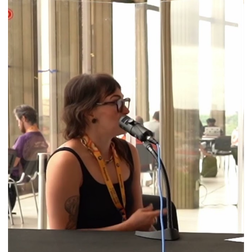
In this episode, I talk with Mateusz Modrzejewski, a professional musician and AI researcher and assistant professor at the Warsaw University of Technology, about AI-generated music: how it works, what artists think about it, the big copyright questions, and where AI tools can genuinely support the creative process instead of replacing it. Outline 00:00 Episode highlights and introduction 00:49 Thoughts on AI-generated music 02:09 The good sides of AI 03:40 The bad sides of AI 04:43 How do professional musicians feel? 08:03 The data scraping problem and data poisoning research 11:33 How AI music generation actually works 15:04 How to start experimenting with AI music 18:26 Future of the music industry 25:22 The AI song contest 29:15 Resources to learn more 🎙️ This episode was recorded live at the Venture café at PyWaw in Warsaw. Episode links AI song contest: https://www.aisongcontest.com/ Librosa library: https://github.com/librosa/librosa Pedalboard library: https://github.com/spotify/pedalboard Intelligent Instruments Lab: https://iil.is/ PanGenerator: https://pangenerator.com/ Pyo library: https://github.com/belangeo/pyo ISMIR tutorials: https://ismir.net/resources/tutorials/ Beyond supervised learning book: https://music-classification.github.io/tutorial/landing-page.html Fundamentals of Music Processing book: https://www.researchgate.net/publication/288774112_Fundamentals_of_Music_Processing NIME conference: https://www.nime.org/ ZAiKS Lab https://www.zaikslab.tech ⁠Warsaw University of Technology https://www.pw.edu.pl
1 de 2