Archival

Archival

por Juanita Tolliver
Temporada 1
America 250 Archives: Woody Guthrie and This Land
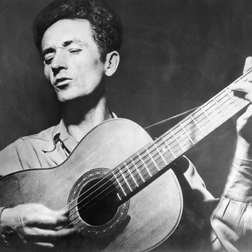
Why do so many of us know “This Land was Made for You and Me,” a song that Woody Guthrie wrote in February 1940 — more than 85 years ago? This classic folk song has permeated American culture so deeply and consistently across space and time — but why? Maybe it’s because of Guthrie’s distinct style and reputation for rambling. Or maybe it’s because the song originated as something of a diss track to God Bless America. And notwithstanding its cultural prominence, this song about land currently occupied by the United States of America entirely omits Indigenous people. Please note that this episode features Woody Guthrie interview clips where he uses the harmful descriptor colored in reference to Black and Indigenous people. For more information, and full transcripts, visit ArchivalPod.com Want to explore more? Shop the Archival Reading List: https://bookshop.org/lists/archival-reading-list Audio Credits: Smithsonian Folkways Recordings; Department of Interior Radio Broadcasting Division Recordings by Alan Lomax and Woody Guthrie; Library of Congress; Pastures of Plenty: A Self Portrait by Woody Guthrie; The Woody Guthrie All-Star Tribute Concert of 1970; Woody Guthrie: A Life by Joe Klein; The Carter Family; Jared Tyler; NPR; Woody Guthrie: American Radical by Will Kaufman; Music by Scott Buckley
America 250 Archives: Mitsuye Endo and James Purcell’s Fight to End Japanese-American Internment
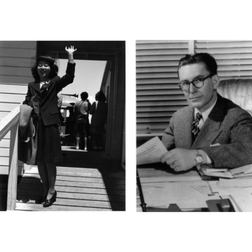
Mitsuye Endo was horrified as she read about the attack on Pearl Harbor in the newspaper. Her mind immediately went to her brother who was serving in the US Army in the Pacific. Her next worry was her job and her own well being as she was fired from her job with the state of California and forcibly removed from her home and into one mass incarceration detention center after another. With the help of attorney James Purcell, Mitsuye was the chief plaintiff in the Supreme Court case that effectively ended Japanese-American mass incarceration centers during World War II. For more information, and full transcripts, visit ArchivalPod.com Want to explore more? Shop the Archival Reading List: https://bookshop.org/lists/archival-reading-list Audio Credits: And Justice for All by John Tateishi, California State Archives, We Hereby Refuse by Tamiko Nimura and Frank Abe, C-SPAN, National Archives, Densho Encyclopedia, Music by Scott Buckley
Sisterhood Archives: Pauli Murray and Eleanor Roosevelt
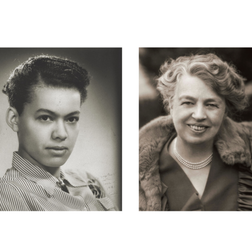
Rev. Dr. Pauli Murray and First Lady Eleanor Roosevelt's friendship spanned decades, and transitioned from "confrontation via typewriter" as acquaintances, to coordinated advocacy as associates, and ultimately to a genuine friendship full of care and support. Sometimes sisterhood is a journey, and these two traversed miles in terms of understanding and growth to get there. For more information, and full transcripts, visit ArchivalPod.com Want to explore more? Shop the Archival Reading List: https://bookshop.org/lists/archival-reading-list I want to hear from you! Send me your reactions to the show: juanitatolliver.com/contact Audio Credits: FDR Presidential Library Archives, Schlesinger Library on the History of Women in America, Ebony Magazine Archives, Song in a Weary Throat by Pauli Murray,The Firebrand and the First Lady by Patricia Bell-Scott, Music by Scott Buckley
Sisterhood Archives: Pat Parker and Audre Lorde
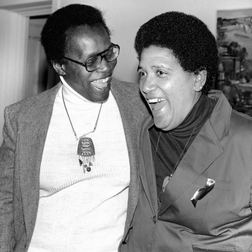
Sisterhood is a balm, and Audre Lorde and Pat Parker enjoyed it's healing powers throughout their decades long friendship. A portion of their dynamic is captured in the archived letters between the two friends, and they contain a swirl of vulnerable moments, goofy delights, and nudges of tough love that only a close friend could deliver with next to no stinging sentiment in their delivery, or reception. For more information, and full transcripts, visit ArchivalPod.com Order Sister Love: The Letters of Audre Lorde and Pat Parker 1974 - 1989: https://t.ly/CEOCV Order A More Perfect Party: https://rb.gy/jfnl6c Audio Credits: Music by Scott Buckley; Sister Love: The Letters of Audre Lorde and Pat Parker 1974 - 1989, Edited by Julie R. Enszer; Spelman College; Schlesinger Library at Radcliffe’s Institute for Advanced Studies; Audre Lorde at UCLA; Woman Slaughter by Pat Parker; Debra Wilson, Cathy Cade, Ollie, Lisbet Tellefsen
Witness Archives: Ida B. Wells’ Memphis Diary
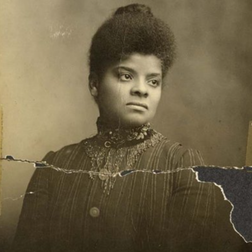
Diaries are deeply personal, unfiltered versions of their authors, and Ida B. Wells-Barnett’s diary from 1885-1887 reveals a young woman in transition. Having just moved from her hometown of Holly Springs, Mississippi, to Memphis, Tennessee, Ida's diary paints a picture of her attempt to balance her need to earn a stable salary as a teacher with her desire to be a published writer. Her early experiences Memphis laid the foundation for the investigative journalist, activist, and leader she became, and it was all driven by her desire for more - more opportunity, more published articles, and more social impact. For more information, and full transcripts, visit ArchivalPod.com Order A More Perfect Party: https://rb.gy/jfnl6c Audio Credits: Music by Scott Buckley; University of Chicago Digital Archives; The Memphis Diary of Ida B Wells, Edited by Miriam DeCosta-Willis; Middle Tennessee State University Digital Archives
Witness Archives: Marion Marguerite Stokes' Mission to Record Everything on TV
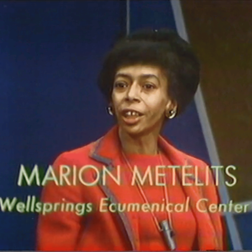
Marion Marguerite Stokes bough her first videotape recorder in 1977. What started as casually recording her favorite shows, evolved into recording 24 hours of television everyday on six to eight tvs and video recorders in her Rittenhouse Square apartment for 30+ years. Her 70,000 plus tapes are a comprehensive television archives that document storytelling and media influence from crisis to crisis. Explore the Marion Stokes archives via the Internet Archive: https://archive.org/details/marionstokesvideo For more information, and full transcripts, visit ArchivalPod.com Audio Credits: Music by Scott Buckley; Recorder: The Marion Stokes Project (2019); Internet Archive; BBC
FBI Archives: Investigating and Intimidating Journalists from the 1940s to the 1970s
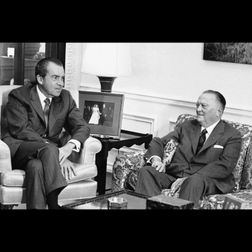
Explore the FBI’s efforts to surveil and impede members of the press through harassment and intimidation tactics from their fixation on Black newspapers and journalists in the 1940s, to President Richard Nixon’s “Enemies List” in the 1970s. Plus, learn about that time the FBI got robbed. For more information, and full transcripts, visit ArchivalPod.com Audio Credits: Music by Scott Buckley; PBS Documentary, The Black Press: Soldiers Without Swords Documentary (1999); American Forum at the University of Virginia’s Miller Center; Television Academy Foundation (2010); Democracy Now (2014)
FBI Archives: Mississippi Burning & The Search for Schwerner, Chaney, and Goodman
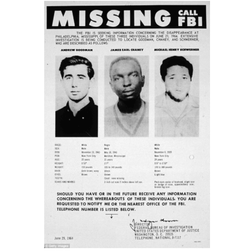
On this episode, we’re exploring a set of archives that I never even expected to dig into, and honestly, these archives were the most heartbreaking, and draining to sift through. I’m referring to the FBI Archives. And today we’re focused on the FBI archives related to Mississippi Burning — not the film, but the real investigation in 1964. Surprisingly, the FBI Archives reveal an unexpected story about who the first investigators were to search for James Chaney, Michael Schwerner, and Andrew Goodman, and they dispel the savior myths about the FBI swooping in and saving the day, like the creative fiction portrayed in the film would have you believe. Plus, listeners get to hear President Lyndon B. Johnson and FBI Director J. Edgar Hoover discussing the investigation via recorded phone calls archived in the Lyndon B. Johnson Presidential Library. For more information, visit ArchivalPod.com. Audio Credits: Music by Scott Buckley; J. Edgar Hoover Press Conference Recordings from the Associated Press Archives; Telephone Recordings from the LBJ Presidential Library
Rest Archives: James Baldwin's Attempts to Rest Abroad
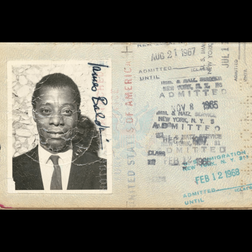
Sometimes rest requires a change of scenery, and for for renown author James Baldwin that included sojourns to Switzerland, Turkey, and the South of France. Listen to part two of the rest archives to understand why Baldwin did not find rest Paris, and where he ultimately was able to experience silence and peace. Please note that there is a brief mention of suicide early in this episode. To see images referenced in this episode of Archival, watch on YouTube @ArchivalPod, and visit archivalpod.com for full transcripts. Credits: Music by Scott Buckley
Rest Archives: How Octavia Butler, Rosa Parks & Shirley Chisholm Practiced Rest & Relaxation
On this episode, we’re exploring rest and relaxation — two things that deserve a lot more time, energy, and focus in our day to day lives. I’m curious — how do you rest? Seeking inspiration, I started digging through the archives, and I found surprising and delightful examples of rest practiced by my favorite authors and leaders: Science Fiction Novelist Octavia Butler, Civil Rights Leader and Activist Rosa Parks, and Congresswoman Shirley Chisholm. From long hikes and yoga to dancing and writing poetry, these luminaries have rest covered. To see the images referenced in this episode of Archival, watch on YouTube @ArchivalPod, and visit archivalpod.com for full transcripts. Credits: Music by Scott Buckley
1 de 2