COURTESY OF

COURTESY OF

por Adam Art Gallery Te Pataka Toi
Temporada 13
Kōrero pono mai Ep2 | (Mis)representations of Te Tiriti in law and policy: the TPB, the RMA and everything in between — Luke Fitzmaurice-Brown
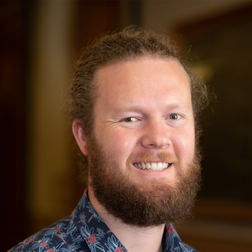
This is a recording of the talk at Te Pātaka Toi Adam Art Gallery on the 25th of March 2026, titled ‘(Mis)representations of Te Tiriti in law and policy: the TPB, the RMA and everything in between’ by Senior Lecturer in the Law Faculty at Te Herenga Waka—Victoria University of Wellington, Luke Fitzmaurice-Brown, This talk was the final in a four-part series ‘Kōrero pono mai: talks on te Tiriti & The Treaty’ that ran in conjunction with the exhibition ‘Whai Wāhi’. These talks take heed from Te Waka Hourua, who call upon institutions to kōrero pono mai / tell the truth. Invited speakers will present short talks grounded in their experiences as legal experts, advocates and scholars in relation to te Tiriti and the Treaty. Fitzmaurice-Brown writes, one of the ways in which te Tiriti o Waitangi has been dishonoured since its signing is through its misrepresentation in New Zealand law and policy. From reference to ‘treaty principles’ in law to attempts to erase the Crown’s te Tiriti obligations altogether, legislation and policy has consistently fallen short of truly honouring the document. This kōrero will focuses on some of the ways that has happened, with particular reference to te Tiriti-based environmental policies, as well as high profile recent examples such as the Treaty Principles Bill. It will also discuss how these failings might be rectified, and what role all New Zealanders have to play in that. Dr Luke Fitzmaurice-Brown (Te Aupōuri) is a Senior Lecturer in the Law Faculty at Te Herenga Waka—Victoria University of Wellington. His research focuses primarily on te Tiriti o Waitangi, child protection and decolonisation.
Kōrero pono mai Ep1 | Signs of a Nation — Carwyn Jones
This episode is a recording of the talk titled ‘Signs of a Nation’ by leading legal academic Carwyn Jones, at Te Pātaka Toi Adam Art Gallery on the 4th of March 2026. This talk was the first in a four-part public programme series ‘Kōrero pono mai: talks on te Tiriti & The Treaty’ that ran in conjunction with the exhibition ‘Whai Wāhi’. These talks take heed from Te Waka Hourua, who call upon institutions to kōrero pono mai / tell the truth. Invited speakers will present short talks grounded in their experiences as legal experts, advocates and scholars in relation to te Tiriti and the Treaty. Jones writes, Te Tiriti o Waitangi is recognised as a founding document of government in New Zealand. But what does this really mean for the role te Tiriti has in our national life? Where do we see it reflected in our law and policy and public institutions? The ways in which institutions like Te Papa present te Tiriti helps to shape our collective understanding and the public discussion of the role of te Tiriti. The changing nature of those public, political, and constitutional conversations – from 1840 to today – reveal important insights about the fundamental relationships between Māori and the Crown. Carwyn Jones (Ngāti Kahungunu) is a Kaihautū of Te Whare Whakatupu Mātauranga at Te Wānanga o Raukawa and the lead academic in the Ahunga Tikanga (Māori Laws and Philosophy) programme there. He is an Honorary Adjunct Professor at Te Kawa a Māui—the School of Māori Studies at Te Herenga Waka—Victoria University of Wellington and a Fellow of Te Apārangi – the Royal Society of New Zealand. His research focuses on Te Tiriti o Waitangi and the rights of Indigenous peoples. He is co-editor of the Māori Law Review, the author of New Treaty, New Tradition: Reconciling New Zealand and Māori Law, a co-author of Treaty Law: The Principles of the Treaty of Waitangi in law and practice, and an editor of the new collection of essays, 50 Years of the Waitangi Tribunal – Whakamana i te Tiriti.
Temporada 12
In Response Ep 04 | Chris Tse & fellow poets
The final episode of the series features new poetry in response to photographs of 19th Century Aotearoa from the exhibition A Different Light: First Photographs of Aotearoa. In this recording of the evening event called ‘Long exposure’, we hear the 13th Poet Laureate Chris Tse and fellow poets Mary Macpherson, Arihia Latham, Margo Montes de Oca, Ada Duffy, Simon Sweetman, and Jackson McCarthy move around the gallery reading new work alongside photographs of their choosing. This event was developed in collaboration with the Alexander Turnbull Library and The National Library of New Zealand Te Puna Mātauranga o Aotearoa and recorded on 07 May 2025.
In Response Ep 03 | Maija Stephens
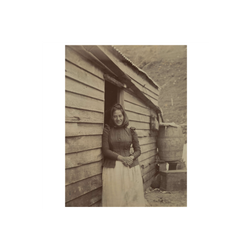
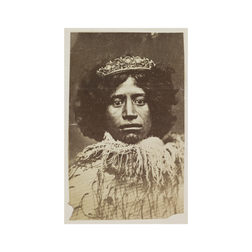
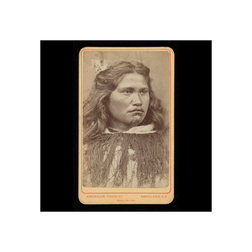
In this episode, we hear artist Maija Stephens responding to three images of wahine Māori: In Mrs Karetai’s House by John H Scott; Wahine Māori wearing a tiara by John McGarrigle; and an image of an unidentified wahine attributed to the American Photographic Company. When looking at these photographs Stephens asks herself, is the person behind the camera a photographer or a kaiwhakaahua? This is a question of positionality for Stephens. In this talk, she considers what it might mean to decolonize the lens, how the language of photography might need to shift, and the impact this has on her own practice. On the occasion of the exhibition A Different Light: First Photographs of Aotearoa, at Te Pātaka Toi Adam Art Gallery (1 February to 15 June 2025), this lunchtime talk was part of the series ‘Through a Contemporary Lens: Artists in Response’ developed in collaboration with artist and educator Caroline McQuarrie, and was recorded on 05 June 2025.
In Response Ep 02 | Matt Tini
The relationship of Māori with photography is a complex one. On one hand, it has been used as a colonising tool to ‘other’, feeding into harmful and reductive colonial stereotypes to appease a colonising gaze. In contrast, it has also been adopted as a symbol of mana and re/claimed to maintain whakapapa connections in a visual form other than the customary whakairo. In the second episode of ‘In Response’, artist Matt Tini discusses the complex histories of tangata whenua in relation to photography, and recontextualises the ways we view such images – historic, present and future – through a te ao Māori perspective. Tini asks such questions as, who were these images intended for? Who keeps the mauri alive of the tipuna represented in the early photographs? How are their stories being presented? This episode is part of a series of recorded talks in response to the exhibition A Different Light: First Photographs of Aotearoa, at Te Pātaka Toi Adam Art Gallery, from 1 February to 15 June 2025. The series ‘Through a Contemporary Lens: Artists in Response’ invited local artists to offer their response to particular photographs and was developed in collaboration with artist and educator Caroline McQuarrie. Recorded 17 April 2025.
In Response Ep 01 | Caroline McQuarrie
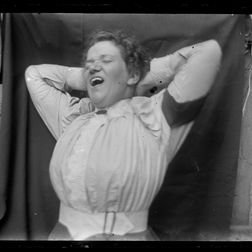
This is the first episode in a series of talks recorded alongside the exhibition A Different Light: First Photographs of Aotearoa. The series was titled ‘Through a Contemporary Lens: Artists in Response’ and featured local artists who were invited to share their response to particular photographs in the exhibition. In this episode, artist and educator Caroline McQuarrie, who helped develop the talk series, looks at Robina Nichol’s portrait of Amy Kirk yawning and considers what it might have meant to be an amateur female photographer in the late 19th century. In the 21st century we have understanding of the gendered gaze in photography, and with this in mind McQuarrie explores what we can ask of these images, and of this photographer and how do we might locate her photographic practice now. Recorded at Te Pātaka Toi Adam Art Gallery, on 13 March 2025.
Temporada 11
The buildings notice me Ep1 | Tūrangahakoa
Hanging on the wall in the Upper Chartwell, Brook Konia’s work Tūrangahakoa connects twelve paired bars pointing upward. A zagged manawa-line is revealed in the middle, signifying the journey one goes on in life. Altogether the artwork is a tohu of belonging, joy and aspiration. In this conversation with Rosalie Koko the 2024 Pia Nahanaha Taonga Curatorial Intern, Konia shares the kōrero informing Tūrangahakoa which navigates around the places, people, objects, customs and ways of relating to each other that transition someone from wandering and wondering to being welcome. This episode is a recording of the public programme eventTūrangahakoa, Brook Konia in conversation with Rosalie Koko, 1.00pm, Saturday 24 August, Te Pātaka Toi Adam Art Gallery, as part of the exhibition The buildings notice me, Te Pātaka Toi Adam Art Gallery, 13.07.24–22.09.24.
Temporada 10
Infrastructure Ep 2 | Finding Ways Forward
The same week the exhibition ‘Infrastructure: power, politics and imagination’ opened at Te Pātaka Toi Adam Art Gallery, select committee submissions closed for the National Government’s Fast-track Approvals Bill. This controversial Bill, which aims to speed up approvals for infrastructure and development projects, has been identified as having implications for iwi and environmental protection. In this political context and sitting amongst artist Matthew Galloway’s immersive project titled ‘The Power That Flows Through Us’, Galloway sat down with Professor of Politics and Māori Studies at Te Herenga Waka—Victoria University of Wellington Maria Bargh, to explore contemporary perspectives on the politics of resource use, with an eye on the past, present and future. This episode is an edited recording of the lunchtime talk titled ‘Finding Ways Forward’ that took place on Wednesday 5th June 2024, in conjunction with the exhibition ‘Infrastructure: power, politics and imagination’, 20 April - 30 June 2024.
Infrastructure Ep 1 | Of Influence & Impact: Political Cartooning in Aotearoa
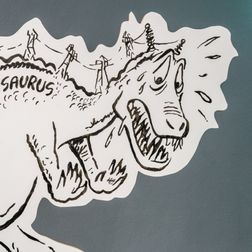
In the project The Power That Flows Through Us artist Matthew Galloway revisits cartoons from the 1970s/80s by Robert Brockie, Sid Scales, Gordon Minhinnik and Daryl Crimp. This historical era of cartooning is the starting point for this podcast episode, which is a recording of a panel discussion that took place on 14 May 2024 in conjunction with the exhibition Infrastructure: power, politics and imagination , Sitting amongst Galloway's project - and in particular, next to historical cartoons enlarged as life-sized sculptures - are the panelists: Sharon Murdoch, the first woman political cartoonist in the Aotearoa mainstream media; Sam Orchard, Assistant Curator for the Cartoon and Comics Archive at the Alexander Turnbull Library; and, cartoonist and researcher, Dylan Horrocks. In this wide-ranging conversation, the panel explore such themes as: the importance of cartoons to the political imaginary; cartoons’ influence on public opinion; the politics of the 70s/80s generation of cartoonists; what political cartooning looks like now; and what it might be in the future.
Temporada 9
Folded Memory Ep2 | Ki te Ngāhere: Conversations about time, material & memory 
A forest consists of many timescales. Through a constant process of renewal and decay, the ecosystem becomes a record of time passing. Similarly, human memory folds together new and old. Every moment that something is remembered material traces are reshaped and reconstructed. This episode is a recording from a panel discussion featuring artists Taarn Scott and Raewyn Martyn in conversation with exhibition co-curator Su Ballard, which took place on 23 March 2024 as part of the closing weekend event for 'Folded Memory' titled 'Ki te Ngāhere: Conversations about time material and memory', Tracing an ongoing thread begun in a previous exhibition — Listening Stones Jumping Rocks (2021) — this conversation considers the way narratives and materials are interchangeable containers of ecological memory. In Invasive Weeds Taarn Scott has rendered Hana Pera Aoake’s poetry material. In Greywacke love poems: returns Raewyn Martyn explored how mutable material can dislodge skewed histories. In this conversation with exhibition curator Su Ballard, Scott and Martyn brought their practices together to reflect on the transformational potential of material as stories and stories as material. Together we imagined new old ways to create survivable futures.
1 de 4