Caropop

Caropop

by Mark Caro
Season 1
Swamp Dogg
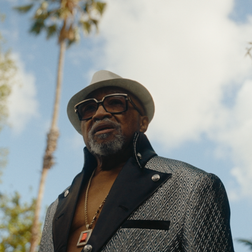
Swamp Dogg turns 84 on July 12, making him 24 days younger than Paul McCartney, yet he’s still on the rise. He’s been gaining new fans through the 2024 documentary Swamp Dogg Gets His Pool Painted; his 31st album, Swamp Dogg Contemplates the Afterlife, is out June 19; and then there’s his cookbook, If You Can Kill It, I Can Cook It. Formerly known as Jerry Williams and Little Jerry Williams, Swamp Dogg is an all-time talent and character. The cover of his 1971 album Rat On! is hall-of-fame worthy itself, but he also has written, performed and/or produced about 2,000 songs while working with hundreds of artists on close to 500 albums. Speaking from his now-famous house, Swamp Dogg reflects on his seven decades of making music; the ways politics and race affected his career; his friendship with John Prine; his role in the 1983 album Beatle Barkers (!) and his ability to keep his songwriting, voice and sense of humor sharp. (Photo by Cooper Davidson.)
Ike Reilly
Singer-songwriter Ike Reilly has been reaching critical mass. He shared a microphone with Bruce Springsteen in January, has gained new fans with the 2024 documentary Don’t Turn Your Back on Friday Night (as well as his SiriusXM show), and is wowing more listeners than ever with his longtime band the Ike Reilly Assassination. He has made music his family business, with his three sons performing with him while his oldest son, Shane, is featured on his new album, Blind and Surrounded, out June 12. Reilly’s sharply observed songs can rouse you and/or break your heart, and he’s quite a storyteller. Here he reflects on how his sons relate to him as a band leader vs. father, and he discusses his friendships with fellow Libertyville, Ill.,, native Tom Morello and Cracker’s David Lowery and Johnny Hickman, among others. A former gravedigger and employee-of-the-year Park Hyatt doorman, Reilly also recalls getting stiffed by a future President of the United States—and what he did in response.
Tom "Grover" Biery (Pet Sounds)
To mark the 60th anniversary of the Beach Boys’ Pet Sounds, Interscope-Capitol has released a limited-edition Definitive Sound Series One Step version of this landmark album. Tom “Grover” Biery, who oversaw the project, tells of its unusual sourcing, which involves the 1972 master of Pet Sounds that was released as part of a double LP with the then-new Beach Boys album Carl and the Passions “So Tough.” Why was that 1972 Pet Sounds so revered, and how did it come to be used here instead of the original 1966 mono master? How does this DSS version differ from the mono/stereo Pet Sounds that Universal's Vinylphyle series just released? Do people buying these new Pet Sounds versions already own multiple copies? (Raises hand...) Biery also produced One-Steps from Dr. Dre, Beck, R.E.M. (as previously discussed on Caropop), Tom Petty, Green Day and Prince and the Revolution, and he explains why the quality justifies the price.
Bill Million (The Feelies)
Bill Million’s percussive strumming propels the Crazy Rhythms of the Feelies, who are playing their only two 2026 shows—and perhaps their final shows ever—May 22 and 23 in Jersey City, New Jersey. As the band marks its 50th anniversary, Million reflects on his songwriting partnership and dueling guitar sounds with lead singer/guitarist Glenn Mercer. How did Mercer and he decide which guitars to play, and did Million always see himself as a rhythm guy? Did they know the Feelies would return, even with a different lineup, during the six-year period between Crazy Rhythms and The Good Earth? What was Million doing while the Feelies weren’t playing between 1992 and 2008? Does Million feel more magic in the studio or on stage? Who sets the rhythm and tempo when the Feelies perform live? What are the Feelies’ plans for recording new material—and how might their instrumentals-oriented alter-ego, the Willies, fit in?
Dave Gregory 2026, Pt. 2 (XTC)
Part 2 of this splendid conversation with XTC guitarist/multi-instrumentalist Dave Gregory picks up with the band’s ill-fated 1982 trip to the U.S. and the end of its touring days. How did he deal with the financial ramifications? Was it necessary for XTC to stop touring to reach its subsequent creative heights? Was the studio Gregory’s happy place, or did he long to be back on stage? How did he balance virtuosity vs. trying to play the perfect part for each song? Which XTC songs did he most regret not being able to play live? Could he still play a frenetic song like “Scissor Man”? Are more “Live Boots” recordings coming? Gregory also revisits his exit from the band and relates the current state of XTC and grudge-holding. Did he see Colin Moulding’s and Terry Chambers’ TC&I project or Chambers’ EXTC tribute band? And does he think the XTeeHee parodies on YouTube are by none other than Andy Partridge?
Dave Gregory 2026, Pt. 1 (XTC)
We’re so happy to welcome back to Caropop one of our favorite musicians, XTC guitarist/multi-instrumentalist Dave Gregory. The occasion is the Record Store Day release—and upcoming CD—of XTC’s fast, furious performance on Live Boots: Emerald City, Cherry Hill, New Jersey, 17th April 1981. In Pt. 1 of this two-parter, Gregory discusses why the band played everything at such breakneck speed and whether he admires or regrets that approach now; what he thinks of the “bootleg” sound quality; how XTC approached concerts differently in the U.S. and U.K.; whether XTC might have lasted longer as a live band if frontman Andy Partridge didn’t throw himself so intensely into each performance; how (or whether) Gregory’s ears survived the tour; which guitars he took on the road; and how the band’s live attack differed on 1982’s abortive English Settlement tour. We also go down a Rickenbacker rabbit hole.
Zev Feldman/Jazz Showcase
Joe Segal, who would have turned 100 on April 24, recorded 8- to-10,000 shows at his own Jazz Showcase and other Chicago clubs. In 2011, “Jazz Detective” Zev Feldman began visiting Segal and exploring his vast archive. Joe Segal died in 2020, but Feldman continued to work with Segal’s son, current Jazz Showcase owner Wayne Segal, and on Record Store Day, live-at-the-Jazz-Showcase albums were released from Joe Henderson, Ahmad Jamal, Yusef Lateef and Mal Waldron, plus an earlier Segal-recorded performance from Terry Callier. Feldman here describes the archive, the tapes’ condition (reel-to-reel? cassettes?), the recordings’ quality and why a digital step was used to prepare them for release. He also discusses why these performances were chosen for release first and what else is in store. And he tells how he wound up with 11 Record Store Day releases this year, including acclaimed ones by Freddie King and Buster Williams. (Photo by Zak Shelby-Szyszko)
Tim Peterson/Squeezebox (Record Store Day)
It's time to get the record store perspective on Record Store Day (April 18) from Tim Peterson, owner of Squeezebox Books & Music in Evanston, Ill. That’s where I line up each RSD morning, so I visited Peterson to hear him explain how it all works. How does he determine which and how many records to order? Does he usually get what he wants? Is it worse to over- or under-order? Do the first-in-line customers tend to be flippers or just big fans? When Taylor Swift has an RSD offering, does that boost other sales? Which of this year’s releases will be most in demand? What are the sleepers? What percentage of the store’s annual sales come from Record Store Day? We also dissect the types of RSD offerings, such as live albums (and the inevitable Grateful Dead box); picture discs and zoetropes; collections of demos, alternative versions and rarities; deluxe album editions; represses of albums you’ve never heard of; and various-artists compilations.
Rick Bayless (Frontera Grill, Topolobampo)
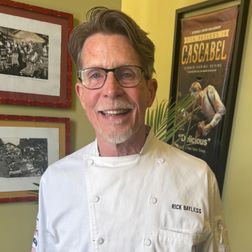
Chef Rick Bayless worked in his parents’ Oklahoma City BBQ restaurant before he found his passion exploring Mexico’s regional foods. When he and his wife Deann opened Chicago’s game-changing Frontera Grill in March 1987, he wowed the ever-packed dining rooms with complexly flavored Mexican dishes featuring hard-to-source ingredients. The chef pushed the boundaries of fine dining two years later by opening Topolobampo, which, like Frontera Grill, would win the James Beard Foundation’s Outstanding Restaurant award, with Bayless previously named Outstanding Chef. Topolobampo became a favorite date spot for Barack and Michelle Obama, who invited Bayless to prepare a White House state dinner. Speaking in a conference room above Frontera Grill, Bayless reflects upon all that plus his experience winning Top Chef Masters; his other restaurants that include Xoco, Bar Sótano and the Tortas Fronteras outlets that serve O’Hare International Airport’s best food; the Frontera retail ventures and what happened to my favorite granola; his efforts to combine cooking and acting on stage; and the post-pandemic state of business, with Frontera’s 40th anniversary approaching.
Gary Klebe (Shoes)
More than a half century after co-founding the classic power-pop band Shoes, guitarist-singer-songwriter Gary Klebe is releasing his first solo album, Out Loud, though he was reluctant to do so. He explains why here and digs into Shoes’ unlikely, inspiring career—how he and brothers Jeff and John Murphy (a previous Caropop guest) formed the band in Zion, Ill., before any of them could play instruments. Little did they know that all three would become masters of crafting and singing perfect guitar-pop songs—and would release their first acclaimed album before they’d played a live gig. What went right and wrong in the band’s career, particularly its three albums on Elektra? Did Klebe start writing the Out Loud songs for a potential Shoes album? Will he and the Murphy brothers ever reboot the band? The self-effacing Klebe also tells whether the band’s name was inspired by the Beatles, and he recalls the one time he played on stage with anyone other than Shoes.
1 of 24