Sign up free
Features
Resources
Pricing
Podcasts
Sign up free
Sign In
The Arab Wor(l)d
by Valeria Rando
History
Islam
RSS feed
Share
Episodes
About
Season 2
Nuovo Cinema Paradiso
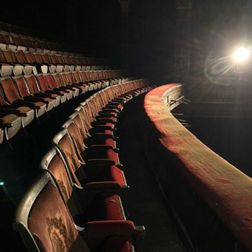
Beirut, 1950s. An access window to the past of a Lebanon that no longer exists, except from the memory of those who lived through those roaring years: and bear witness to them. This is the love story of a man for his country, for its 225 abandoned cinemas, for a generation that has been silenced by the civil war, for the smell of smoke in the halls, for Coca Cola, the drive ins, for the hint of eroticism that escaped censorship, and much more. La dernière séance of Antoine Kabbabe.
Season 1
Translating the Exhaustion
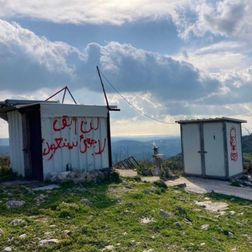
In one of his latest collections of poems, Najwan Darwish talks about himself, for the first time, as an exhausted Palestinian. At the end of this verbal journey in the lands of Palestine, I reflected on the difficulty of producing and translating a feeling that hardly ever found voice in collective narratives. That of exhaustion. With the notes of my journey in Nablus after last October's siege, the eloquence of empty spaces and of borders that cannot be crossed.
Returning to Iqrit
On Christmas Day 1951 the Christian village of Iqrit, near the Lebanese border, was about to be wipped off the face of the earth by Israeli troops. Since 2012 a group of activists decided to return by permanently living in the rooms of the only building that is still standing: the Church of Our Lady. I talked with Amir, one of the youngsters that made the return to Iqrit possible.
Strangers at Home
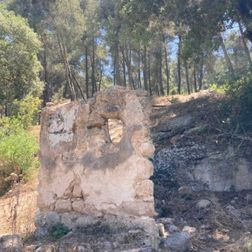
It was May the 31st and Ibraheem and I were practicing the haqq al-‘awda, the expressions Palestinians all over the world refer to as the right of return. Return to a village called Saffouri, that during the 1947-1949 war was destroyed and depopulated by Israel. Its protagnists are the internal displaced people, also known as present-absentees, Palestinian citizens of the Jewish state unable to go back to the houses of their ancestors. Still, they are claiming their right to walk on that soil. Return – is this.
The invisible Al-Khalil (2)
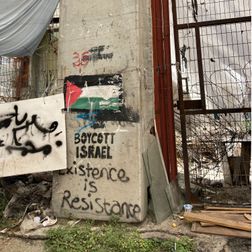
The Palestinian journey continues to Hebron/Al-Khalil, disputed city in the Southern occupied West Bank. Through the voice of non-violent activists of the Youth Against Settlements’ group, a sparkle of long-term resistance brights.
The invisible Al-Khalil (1)
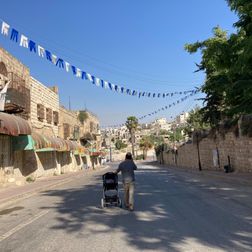
The Palestinian journey continues to Hebron/Al-Khalil, disputed city in the Southern occupied West Bank. This episode is a collage of voices and languages to attempt to frame the historical roots of violence in one of the bloodies cities in Palestine.
The Language as a Land
Palestinians of Israel, also known as Arabs of the fourty-eight, suffer the occupation in the language they speak: Arabic contaminated with Hebrew. An insight into a topic which shows the complexity of the Palestinian people from a different perspective, that of language.