The Extreme Crisis Leadership Show

The Extreme Crisis Leadership Show

by CHARLES CASTO
Season 3
Module 8 Beyond the Simulator
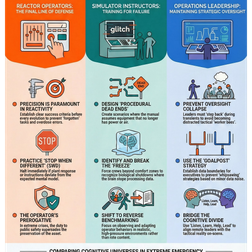
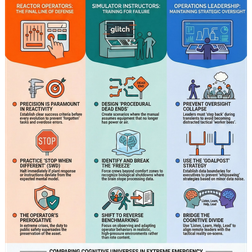
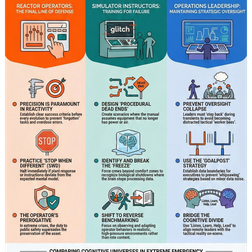
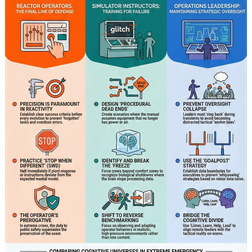
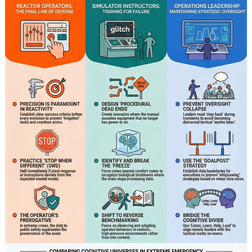
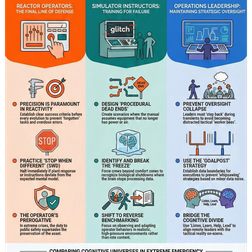
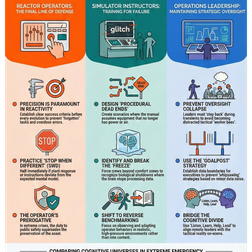
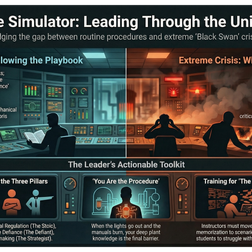
Introduction: Beyond Rote Procedures The core theme of the episode centers on the reality that in extreme nuclear crises, training ends and adaptive capacity begins. The guiding principle is simple: "When the lights go out, YOU are the procedure". Routine vs. Extreme Crises Most operators train for routine crises where a playbook exists and outside help is just a phone call away. However, the episode shifts focus to Extreme Crises (like Fukushima or Zaporizhzhia) which are "Black Swan" events with no playbook, where leaders experience isolation and threats to life. The Failure of Imagination & Blind Spots Disasters rarely start with physical failures; they begin with mental gaps and the "hubris trap" of believing a design is perfect. PAKS Hungary (2003): Engineers knew a tank would boil in just over 12 minutes, but this critical calculation never made it into the operator's procedure, turning a 12-minute blind spot into a 15-year cleanup. Browns Ferry (1975): When a candle ignited a fire that disabled cooling systems, an operator's deep, non-standard knowledge of the plant's construction saved the core—proving that understanding the "why," not just the "how," is the final barrier. The Three Pillars of Fukushima Leadership The episode highlights three critical leadership pillars demonstrated during the Fukushima disaster: Emotional Regulation: Supervisor Izawa knew he couldn't control the reactor until he controlled himself, deliberately checking his own pulse and breathing before speaking to his team. Constructive Defiance: Manager Yoshida deliberately disobeyed corporate orders to stop seawater injection, prioritizing the actual physics of the reactor over headquarters politics. Sensemaking & Momentum: Masuda used whiteboards to organize chaos and forced his team to rest, understanding that managing human endurance is just as important as managing water levels. Conclusion: The Heroism Paradox The episode concludes with a powerful message for instructors: Stop training for success and start training for the "Freeze". If operators aren't made uncomfortable by uncertainty in the simulator, they aren't learning true crisis leadership. Ultimately, heroism is evidence of system failure; the true duty of the industry is to design robust systems and train adaptive, strategic thinkers who survive.
Module 4 Deepwater
Another Ultimate Black Swan
Module 7 Epilogue
This training curriculum focuses on crisis leadership and human performance during catastrophic "Black Swan" events where standard procedures fail. By analyzing disasters like Fukushima, Deepwater Horizon, and Browns Ferry, the modules teach operators to recognize when manuals become "shackles" that no longer reflect physical reality. A central theme is the "1% Cognitive Contingency," which empowers leaders to prioritize technical justice and public safety over corporate assets or rigid compliance. The text highlights how organizational silence, the normalization of deviance, and oversight collapse contribute to failures in high-stakes environments. Ultimately, the materials advocate resilience-based training that builds the moral courage and adaptive capacity operators need to act as the last line of defense.
Module 6 Beyond Design Basis
This educational module explores the transition from routine operations to extreme leadership when unforeseen catastrophes, or Black Swans, render standard procedures obsolete. By analyzing historical nuclear crises like Fukushima and Zaporizhzhia, the text illustrates how complacency and a failure of imagination often precede disaster, necessitating a shift from administrative management to adaptive, decisive action. The curriculum emphasizes vital leadership principles such as establishing a shared reality through transparent communication, maintaining physical presence at the scene, and exercising the operator’s prerogative to defy corporate orders in favor of public safety. Ultimately, the material seeks to build adaptive capacity in operators, moving beyond rote training to ensure they can navigate the "fog of war" and act faster than a crisis can progress.
Module 5 Browns Ferry
A white swan turns black
Module 4a Paks
A white elephant becoming a black rhino
Module 3 Fukushima
The ultimate Black Swan
Module 2 October 4
A white swan that cascades
Module 1 Operator Extreme Crisis Training
Introduction to Extreme Crisis Leadership
Season 2
Extreme Crisis Communications - Trust and Confidence
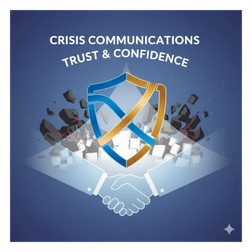
Surprising Truths About Why We Distrust Institutions (And What They Get Wrong About Us)” 🧠 Introduction: The Trust Gap Institutions often misread public skepticism as ignorance or irrationality. When officials declare a risk “low” or “acceptable,” many people still feel uneasy—not because they misunderstand the data, but because they don’t trust the messenger. This disconnect isn’t just about poor communication; it’s about a deeper misalignment in values and expectations. 1. 🎯 Trust vs. Confidence: A Crucial Distinction Confidence is about competence—believing an institution can do its job based on evidence and track record. Trust is about character—believing an institution shares your values and intentions. Institutions often respond to public concern with more data, trying to build confidence, when what people actually want is reassurance of shared values. This mismatch leads to failed communication and deepens the trust gap. 2. 🗣️ Experts and the Public Speak Different Languages Experts focus on technical risk and probabilities. The public focuses on ethical concerns, fairness, and potential consequences. When institutions ignore these emotional and value-based dimensions, they misinterpret public reactions as irrational when they’re actually responding to a different set of concerns. 3. 🚨 Elite Panic, Not Public Panic Contrary to popular belief, mass public panic is rare in crises. What’s common is “elite panic”—leaders fearing public reaction more than the actual hazard. This fear leads to withholding information, which erodes trust and fuels rumors. Example: During Hurricane Katrina, officials focused on looting and lawlessness, issuing extreme orders based on unfounded fears, which worsened public perception and outcomes. 4. 🌊 Risk Is Socially Amplified The Social Amplification of Risk Framework (SARF) explains how small events can become major crises. Risk perception spreads like ripples in a pond—media, social networks, and institutional responses amplify or dampen public concern. The technical severity of a risk isn’t the only factor; how it’s perceived and communicated matters just as much. Institutions must manage not just the hazard, but the social response to it. 5. 🧩 Trust Is Fragile and Asymmetric Building trust takes time and consistent effort. Losing trust can happen instantly—primarily when institutions act in ways that suggest misaligned values or hidden motives. The “trust asymmetry hypothesis” shows that negative events have a more substantial psychological impact than positive ones. Once scared, people are hard to “unscare.” Transparency and honesty are essential from the start. 🛠️ Conclusion: Rethinking the Conversation Public distrust isn’t irrational—it’s a rational response to institutions that fail to align with public values. The problem isn’t just communication; it’s institutional design. To rebuild trust, institutions must:Prioritize transparency over spin. Show alignment with public values. Understand that data alone doesn’t build trust—character does.
1 of 3