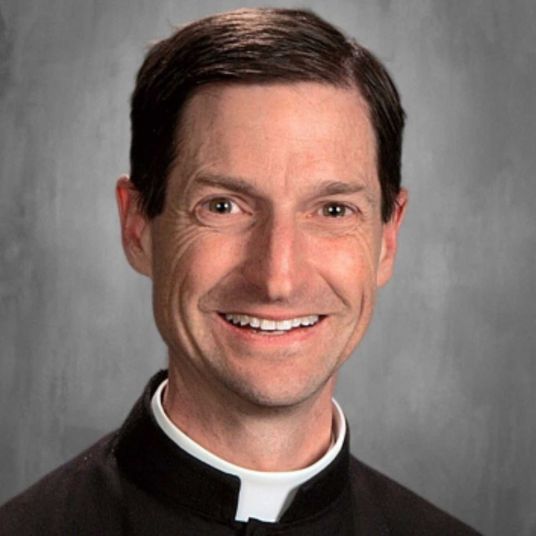
Sermons of Fr Paul Robinson SSPX

Sermons of Fr Paul Robinson SSPX

by Fr Paul Robinson
Season 2026
We Must Love Our Mother the Church, Sermon by Fr. Paul Robinson, SSPX
Two weeks ago, we celebrated Mothers’ Day in order to honor our physical mothers, who brought us into this world and nourished and took care of us when we were children. During the whole of this month of May, we honor our spiritual mother, Mary, Our Lady, who takes care of all our spiritual needs as mediatrix of all the graces we receive. With today’s great feast of Pentecost, we honor yet a third mother, we have yet another Mother’s Day in the month of May. The mother we honor today is Holy Mother Church. The Church is our mother because she is the bride of Our Lord Jesus Christ and is so united with Christ that we say she is His Mystical Body. They are, as it were, two in one flesh. United together, Our Lord and His bride bring forth children unto eternal life. They do this by governing, teaching and sanctifying their children, that is, Catholics. We are born into new life by baptism, we are healed by confession and we are nourished by the Holy Eucharist. Our Mother the Church does all these things for us. Today’s feast is like the birthday of our mother the Church. While Our Lord is the head of the Church, the Holy Ghost is her soul. He descended upon the Apostles today and gave them the spiritual gifts they needed to fulfill their priestly functions. The day of Pentecost is the day when they began their mission of going to all nations to baptize people and bring them into the Church. It was the day that the Church came forth and manifested herself to the world. We have a duty to love all of our mothers, and Holy Mother Church is no exception. We must be grateful to be Catholics and desire to do our part, in our life, to assist our mother the Church. This is all the more true today, when our mother is being attacked. What we are witnessing today has often been compared to Our Lord’s Passion. In past centuries, the Church at times resembled Our Lord in His public life or even His triumph over His enemies. But today, she resembles Our Lord on the Cross, in that she is wounded and being disfigured by her enemies. One of the most painful aspects of this passion is that, just as Our Lord was betrayed and abandoned by the Apostles, so too the Church today is being betrayed by the successors of the Apostles. The Church remains the Spotless Bride of Christ in herself, but her external appearance has been disfigured by false teaching and bad liturgies. It is like a difficult situation in a family. Consider if the sons of a family started honoring other women as their mother than their actual mother. This would take away from their proper mother the honor due to her. Say they brought those women over their house, gave them presents, and told them they loved them, all in the presence of their own mother. This is similar to today’s Popes showing all this respect to false religions: kissing Korans, hosting Pachamama idols, honoring fake Anglican prelates, praying with leaders of all different religions. These things make it seem like these false religions are able to be mothers of souls, as if they can lead souls to Heaven, as if they can do only what the bride of Christ can do.
Why Did Our Lord Ascend Into Heaven?, sermon by Fr. Paul Robinson, SSPX
In today’s epistle, we have this very astonishing scene where Our Lord is speaking to the Apostles, instructing them. And then, suddenly, Our Lord starts lifting up from the earth and goes up into the heavens until He disappears in the clouds. The way it is described, it almost seems like he is in the middle of speaking to them when this happens. Whereas, the way it is described in Luke, the same author, He gives them a last blessing and then goes up to Heaven. The Apostles are not sad about Our Lord going up to Heaven. Rather, St. Luke says that they returned to Jerusalem with great joy. But I think that we ourselves want to ask Our Lord questions about what has just happened. We especially want to ask Him, “Lord, why are you leaving us? Why don’t you stay here on earth and be with us and help us? Please stay to cure our sicknesses, cast out our devils, and raise our dead.” This is an important question and we are curious to know how Our Lord would answer. We do not have an explicit answer in the Gospels but I do think that we find the answer there, if we look closely, not just one answer, but multiple ones.
We Are Begotten of God the Father, Sermon by Fr. Paul Robinson, SSPX
In today’s epistle, St. James tells us that God, “of his own will hath begotten us by the word of truth, that we might be, as it were, the first-fruits of his creatures.” In the New Testament, we hear a lot about this idea that our Father in Heaven “begets” us. It is mentioned in every Mass, at the Last Gospel, when we hear: “As many as received him, Our Lord gave them power to be made the sons of God, to them that believe in his name. Who are born, not of blood, nor of the will of the flesh, nor of the will of man, but of God.” At the beginning of his first epistle, St. Peter says, “Blessed be the God and Father of Our Lord Jesus Christ, who according to his great mercy has begotten us again, through the resurrection of Jesus Christ from the dead, unto a living hope, unto an incorruptible inheritance”. But what does this mean when Scripture says that we are begotten by God the Father?
We Need To Sing At Mass, Sermon by Fr. Paul Robinson, SSPX
“Shout with joy to God, all the earth. Sing you a psalm in his name. Give glory to His praise.” These words of today’s Introit are inviting us to rejoice in God and not only to praise Him but to give glory to His praise. How are we to do this? By singing. As human beings, singing is one of the best means we have to express the joy that is in our hearts and also give solemnity to our rejoicing. God has given us the great gift of our human voice and practically everyone around the world uses it at times to sing. The human voice is considered to be superior to all musical instruments for a number of reasonsBecause it is an instrument that is part of our body, we are able to produce many more sounds with it, and especially we are able to form words. Humans respond emotionally more to the sound of the human voice than to any instrument. The human voice alone functions as both a wind and a string instrument at the same time. It is for this reason that humans have always made music using their voices, using it to accompany their work, their gatherings, and especially their religious ceremonies. And just as the Catholic Church provides us with the greatest act of worship of God, the Holy Mass, so too she provides us with the greatest music to accompany the worship of God. The need to compose proper music for the Mass has been so great that the Mass has often been referred to as the foundational pillar of Western music. It was because of the Mass that musical notation was standardized, that polyphonic music was developed, and that musicians had employment over the centuries. For a long time, in the history of the Church, all Masses were sung Masses; the Low Mass only came into being in the Middle Ages. St. Paul already speaks about singing in his epistle to the Ephesians, when he invites them to “be filled with the holy Spirit, speaking to yourselves in psalms, and hymns, and spiritual canticles, singing and making melody in your hearts to the Lord” (Eph. 5:18-19). This is the epistle for the 20th Sunday after Pentecost. The Fathers of the Church spoke of the importance of singing at Mass:St. Augustine explained that we sing at Mass to show our love for God. St. Basil the Great says that our liturgical songs are like a spiritual incense that raises up to God. St. John Chrysostom said these beautiful words: “Every believer is a musical instrument made by God, and at the same time a musician. If the musician (the soul) keeps the instrument (the body) pure and uses it properly, the two together raise to the Creator a hymn of praise that is pleasing to God.” The bottom line is that one of the main reasons for which God created the human voice is for singing, and the best possible use of the human voice is singing to God at Mass.
Should I Try A Vocation?, Sermon by Fr. Paul Robinson, SSPX
We call today “Good Shepherd Sunday” because of the Gospel where Our Lord compares Himself to a shepherd. It is traditional today to speak of the question of vocations, because of the fact that a priest is a shepherd of souls. The question of a vocation is a crucial one because it concerns God’s plan for our life. As Catholics, we believe that God has created each one of us for Himself, for us to dwell with Him forever in Heaven. Meanwhile, God creates us and places us on this earth, asking us to serve Him during this life. If we do that, He will give us the eternal reward of Heaven once this life is over. God has established two main paths to serve Him in during this life: the married life, and the religious life or priesthood. It is so important that young people take the time to ask themselves which of these two states of life would be better for them to choose. Both of them are good, and so it is never sinful to choose marriage instead of a vocation. But the vocation is a higher choice, because it is a higher way to serve God. Everyone in this chapel who has entered into their state of life had to, at one time, ask themselves these important questions: what should my future be? What choice should I make of my state of life? This is as much true of myself as everyone else. In today’s sermon, I want to explain two important differences between choosing a vocation and choosing the married life.
St. Joseph and the Patriarch Joseph, Sermon by Fr. Paul Robinson, SSPX
Why does the Church have us read about the patriarch Joseph on the feast of St. Joseph?
Resurrection is Real, Sermon by Fr. Paul Robinson, SSPX
What is real and what is not real? There are many things that we know through direct observation. But reality is much greater than what we can observe directly. For instance, for centuries, mankind was not aware of the microscopic world. There were some who speculated about it but could not prove that it existed. Regardless of what human beings thought about it, though, that microscopic world was existing. Through the invention of microscopes, we are now able to directly observe microbes, cells, DNA and, to some extent, even atoms. Now, no one questions that they exist because we are able to see them directly. We know now that a single drop of water contains 20 million microbes and a single teaspoon of soil contains up to one billion microbes. Teeming with life! But there are still many aspects of reality that we are not able to see directly. God wants it to be this way. He wants there to be hidden aspects of reality that we are not able to know by observation. Some of those things that we cannot observe directly, He wants to tell us about and ask us to believe that they exist on the basis of faith in His word. This is the case for the truths of our faith. We are not able to observe directly any of the things that we believe in our Catholic Faith. We do not believe in them because we are able to observe them; we believe in them—we consider them to be real—because God, Who is the Master of all reality, tells us that they exist. One of the things we are all able to observe directly, as being part of reality, is death. One of the things that we are not able to observe directly, but we believe on faith, is resurrection We have all experienced people dying during our life. But none of us has experienced someone coming back to life. We believe that we will rise from the dead because Our Lord told us about it and because He Himself rose from the dead. And just like the other aspects of reality that we are not able to observe, some people believe in the resurrection and some people do not. The resurrection was something that both Jewish and pagan peoples, in the time of Our Lord, had a hard time to accept.
Persecution of Our Lord, Persecution of Tradition, Sermon by Fr. Paul Robinson, SSPX
During the second half of Lent, the Church does something remarkable in the traditional liturgy: she has us read almost exclusively from the Gospel of St. John. From day 21 until the last day of Lent, there are only two Gospels that are not from St. John, outside the readings of the Passion. During that time, we read about 43% of the Gospel of St. John. It is clear that the Church wants us to focus on this Gospel in order to learn about the Passion. We know that this Gospel is unique: it was written long after the other three Gospels; it contains more words of Our Lord than any of the other Gospels; it seeks to complete what is missing in the other Gospels; it focuses especially on Our Lord’s claim to be God and His conflicts with the leaders of the Jewish religion. I thought it might be helpful for us, on this Passion Sunday, to consider three things regarding all of these passages of St. John that the Church gives us in the second half of Lent:What is Our Lord doing and what are His claims about what He is doing? What is the reaction of those who witness His actions and hear His claims? What does this mean for us today?
Pagan Impurity, Sermon by Fr. Paul Robinson, SSPX
When we read the epistles of St. Paul, we are mainly reading letters written by an Apostle to former pagans. These were people who had grown up in the world of the Roman Empire. It was a world of great military power and of amazing engineering feats, but also one of great decadence. These people were not just used to leading immoral lives; leading such lives was a way of life. In other words, it was considered normal behavior to be immoral. By this, I mean getting drunk, committing fornication, seeking after riches, and so on. Then, this Jewish man named Paul came into their lives, explaining to them that God Himself came down upon this earth and that He taught what we are made for, He redeemed us from our sins, and He showed us how we must live our lives in order to get to Heaven. Many of these pagans converted and, when they did, they completely changed their lives. They stopped living as pagans in the Roman Empire and started living as Catholics. At the same time, they still had to struggle greatly against their old habits, particularly the habit of impurity. It is striking that, in today’s epistle and in last Sunday’s epistle, the Church wants us to read St. Paul exhorting these former pagans to fight against impurity. We are Catholics living 2,000 years later, we are in the middle of the penitential season of Lent, and the Church wants us to hear these words of the Apostle Paul to help us make that same fight against sins of the flesh that the first Catholics were doing. Today, I would like us to hear some words of these two epistles about impurity, to understand what they mean, and also to understand why it is so important to fight impurity.
A Boost in Lent, Sermon by Fr. Paul Robinson, SSPX
#sermon #catholic There are two times during Lent when the Church tries to give us a boost and encourage us to persevere in our Lenten practices. One time, of course, is Laetare Sunday, which occurs just after the halfway point of Lent. The other time is today, when we are a quarter of the way through Lent. The fact that the Church tries to encourage us today indicates to us that we should already be feeling a bit worn out by our Lenten resolutions. We should be needing a second wind. If we have not yet made any resolutions for Lent, we must be sure to do so today. If we are finding our resolutions easy, perhaps we should add something to them that is more difficult. For those of us who are worn out, the Church gives us encouragement in the same way that Our Lord chose to encourage the Apostles right before His crucifixion. He did it by becoming transfigured before them. The Church shows us that she really wants to reflect carefully on this episode in Our Lord’s life by giving us the same Gospel two days in a row, for Ember Saturday and today. She only does this one other time, Ember Saturday in Advent and the Fourth Sunday of Advent. This transfiguration is encouraging for us because it shows the glory that will come at the end of our struggles. If we persevere in the Catholic life, if we continue carrying our Cross and being faithful, one day we will enter heavenly glory. Our garments will be as white as snow because of the radiance of our body. Our body will shine brighter than the sun. Just as when there is a contest, the contestants are shown the prize that will be awarded to the winner before they start the contest. Seeing the prize encourages those who are competing. When they are in the midst of the competition, they think about what they will earn if they win and they continue in their efforts. So, too, for us, a quarter of the way through Lent and a certain percentage of the way through our life. We might be weary of our duty of state and the daily grind. We might be weary fighting against the world, the flesh, and the devil. Then, we remind ourselves: if I persevere, I will win an eternal crown. I will be happy forever. I will receive a glorified body that will never suffer. This vision of Our Lord’s glory had a huge impact on St. Peter. He mentions it as definitive proof of Our Lord’s divinity in his second epistle, “We were not following fictitious tales when we made known to you the power and coming of Our Lord Jesus Christ, but we had been eyewitnesses of his grandeur. For he received from God the Father honor and glory, when from out the majestic glory a voice came down to him. And this voice we ourselves heard borne from heaven when we were with him on the holy mount” (2 Pet. 1:16-18) This vision of Our Lord’s glory really happened. And it is a real proof of the glory we will have.
1 of 30