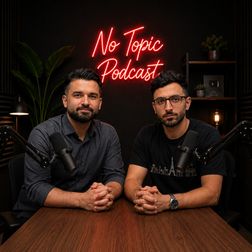
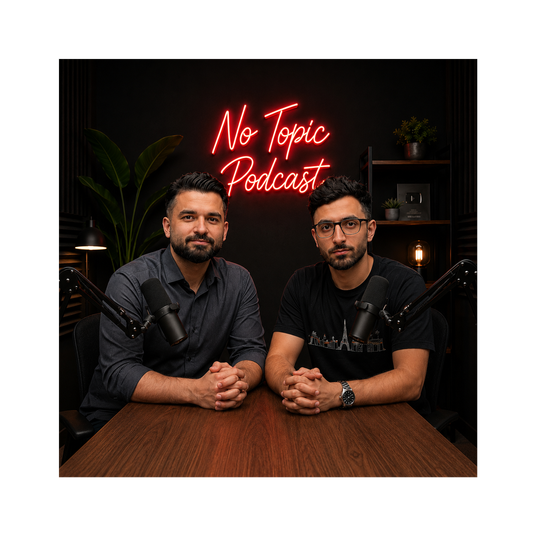
No Topic Podcast

No Topic Podcast

by Moe and Omid
Season 1

House or Apartment? Renting vs Buying a Home | Simple English Podcast for A2 B1 English Learners

Would you rather live in a house or an apartment? Is it better to rent a home or buy your own place? In this episode of No Topic Podcast, Mo and Omid discuss housing and accommodation in a simple, natural English conversation. They explore the advantages and disadvantages of living in a house compared to an apartment. They also discuss the financial side of renting and buying a home, including long-term stability, flexibility, mortgages, maintenance costs, and financial responsibility. Whether you're learning English, thinking about your future home, or simply interested in everyday life topics, this episode will help you explore different perspectives while improving your English listening skills. 🎧 In this episode, you'll learn about: The pros and cons of living in a house or an apartment Renting vs. buying a home The advantages of homeownership Why renting can offer more flexibility Mortgages, maintenance, and housing costs How to choose a home that fits your lifestyle and budget 📚 Improve your English naturally! This episode is suitable for A2–B1 English learners who want to improve their listening comprehension, learn useful vocabulary, and follow conversations about everyday topics. 💬 Join the conversation! Would you rather live in a house or an apartment? Would you prefer to rent or buy your own home? Tell us your opinion in the comments! Subscribe to No Topic Podcast for more simple English conversations about science, technology, psychology, culture, and everyday life. #LearnEnglish #SimpleEnglish #EnglishPodcast #Housing #RentingVsBuying #EnglishListening #A2English #B1English

Why Does Bad News Spread So Fast? Social Media & Fake News | Simple English Podcast A2 B1

Can you really trust the news you see on social media? Why does bad news spread so quickly? And how can you tell the difference between real news and fake news? In this episode of No Topic Podcast, Mo and Omid have a simple English conversation about news and media. They explore how social media has changed the way we get information, why misinformation spreads online, and why negative stories often attract more attention than positive ones. You'll also learn about the business behind the news, the power of headlines, and the importance of checking facts before sharing information. Finally, we discuss an important question: should journalists share everything about famous people's private lives, or should privacy come first? 🎧 In this episode, you'll learn about: How social media has changed the news Fake news, misinformation, and fact-checking How to identify reliable sources Why negative news gets more clicks and attention How headlines can influence our opinions Privacy, journalism, and public interest 📚 Improve your English while exploring real-life topics. This episode is ideal for A2–B1 English learners who want to improve their listening comprehension, learn useful vocabulary, and understand natural conversations in simple English. 💬 Join the conversation! Do you trust the news you see on social media? Do you think news companies focus too much on negative stories? Share your opinion in the comments! If you enjoy learning English through interesting conversations, subscribe to No Topic Podcast for more episodes about science, technology, psychology, culture, and everyday life. #LearnEnglish #SimpleEnglish #EnglishPodcast #FakeNews #NewsAndMedia #EnglishListening #A2English #B1English

Why You Understand English But Can't Speak It | Simple English Podcast for A2 B1 Learners

Do you understand English but struggle to speak it? Do you know the grammar and vocabulary but feel nervous when it's time to have a real conversation? In this episode of No Topic Podcast, Moe and Omid talk about language learning, English speaking skills, fluency, confidence, and communication. We explore why some people seem to learn languages faster than others and why studying grammar and memorizing vocabulary aren't always enough to help you speak naturally. We also discuss the fear of making mistakes, the importance of regular practice, and how to become more confident when speaking English. But here's an important question: Do you really need to live in another country to become fluent in English? We discuss how podcasts, videos, online conversations, language partners, and AI tools can help you create an English-learning environment wherever you live. This episode is made for A2–B1 English learners who want to improve their listening skills, learn useful vocabulary, and become more comfortable expressing their ideas in English. 🎧 Listen to the conversation, learn from Moe and Omid, and discover practical ways to make English part of your daily life. In this episode, you'll learn about: Why some people learn languages faster than others The most difficult parts of learning a new language How to improve English speaking fluency Why understanding English doesn't always mean you can speak it How to overcome the fear of making mistakes Building confidence through speaking practice Why perfect grammar isn't necessary for communication How to practice English without living abroad Using podcasts, videos, and AI to learn English How to build a daily English-learning habit Useful English vocabulary: talent, fluency, confidence, exposure, communication skills. If you enjoy learning English through natural conversations about psychology, personal growth, science, technology, and everyday life, subscribe to No Topic Podcast for more episodes in simple English. 💬 Let's talk! What's the most difficult part of learning English for you: speaking, listening, grammar, or vocabulary? Have you ever been afraid of making mistakes when speaking? Tell us in the comments! #LearnEnglish #EnglishSpeaking #SimpleEnglish #EnglishPodcast #EnglishListening #SpeakEnglish #EnglishFluency #A2English #B1English

What Makes a Good Role Model? Famous People, Parents & Teachers | Simple English Podcast A2 B1

Who is your role model? Is it a parent, teacher, athlete, celebrity, or someone you follow online? In this episode of No Topic Podcast, Moe and Omid talk about role models, famous people, parents, teachers, young people, and the influence they have on our lives. We start by asking a simple question: What makes someone a good role model? A good role model doesn't have to be perfect. We talk about why actions can be more important than words, how we can learn from someone's positive qualities without copying their entire life, and why putting people on a pedestal can sometimes be a problem. We also discuss whether famous people and celebrities can really be good role models. Social media has made this question even more interesting because we often see only a small part of a person's life online. Finally, we talk about young people and influence. Who has the biggest influence on them — parents, teachers, friends, celebrities, or social media influencers? This episode is made in simple English for A2–B1 English learners, so you can improve your English listening skills while having an interesting conversation about psychology, relationships, personal growth, and everyday life. In this episode, we talk about: • What makes someone a good role model • Why role models don't have to be perfect • Learning from people's positive qualities • Famous people and celebrities as role models • The influence of social media • Why we shouldn't blindly follow famous people • Why role models can be useful • Parents and their influence on children • Teachers and their influence on students • Friends and peer influence • Social media influencers and young people • How other people can shape our behavior and thinking Useful English Words Role model — someone you admire and learn from Look up to — to admire and respect someone Set a good example — to show others how to behave through your actions Admire — to respect someone for what they do Influence — the power to affect how someone thinks or behaves Responsibility — a duty to act in the right way Who is a role model in your life? What have you learned from that person? Tell us in the comments. If you enjoy learning English through conversations about psychology, culture, technology, self-improvement, relationships, and everyday life, subscribe to No Topic Podcast and join us for the next episode. #RoleModels #SimpleEnglish #EnglishPodcast #LearnEnglish #EnglishListening #Influence #SelfImprovement #A2English #B1English #EnglishLearning
Culture, Art and Museums: Why Are They Important? | Simple English Podcast for A2 B1 Learners

Why do we need museums? What is culture? And why is art important in our lives? In this episode of No Topic Podcast, Moe and Omid talk about culture, art, museums, history, and heritage in simple and easy-to-understand English. We start by asking what culture really means and how it shapes the way people live, communicate, celebrate, eat, and understand the world. Then, we talk about art and why music, paintings, movies, photography, stories, and even buildings can be forms of artistic expression. Finally, we explore museums and ask an important question: Why do we keep old objects in museums? Museums help preserve objects, stories, traditions, and parts of our history. They can also help us understand different cultures and learn more about the people who lived before us. This episode is designed for A2–B1 English learners who want to improve their English listening skills while learning about interesting topics. 🎧 Listen to the conversation and learn useful English vocabulary related to culture, art, history, and museums. ### In this episode, we talk about: • What culture means • Why culture is important • Culture and identity • Understanding different cultures • Why art matters • Art and creativity • Music, movies, photography, and painting • Why museums are important • How museums preserve history • Cultural heritage • Learning from the past ### Useful English Words Identity — who you are and what makes you different Open-minded — willing to understand different ideas Expression — showing thoughts or feelings Creativity — the ability to create new ideas or things Preserve — to keep something safe and in good condition Heritage — important traditions, objects, and history passed down from the past If you enjoy learning English through conversations about culture, psychology, science, technology, history, and everyday life, subscribe to No Topic Podcast and join us in the next episode. What part of your culture is most important to you? Do you think art is necessary in our lives? And when was the last time you visited a museum? Tell us in the comments. #SimpleEnglish #EnglishPodcast #LearnEnglish #Culture #Art #Museums #EnglishListening #A2English #B1English #History

Perfectionism Is Stopping You: How to Stop Overthinking and Start Taking Action | Simple English

Do you always try to do everything perfectly? Do you overthink your decisions, worry about making mistakes, or delay starting because you feel you are not ready? In this Simple English Podcast episode, we talk about perfectionism, overthinking, fear of mistakes, and the pressure to be perfect. We explore why perfectionism can stop us from taking action, learning new things, and enjoying our lives. If you are a perfectionist or someone who often overthinks, this conversation can help you understand your thoughts and find a healthier way to move forward. This episode is made in simple English for A2–B1 English learners, so you can improve your English while learning about perfectionism, confidence, personal growth, and everyday life. 🎧 Listen to the episode, learn useful English vocabulary, and think about your own relationship with perfectionism. In this episode, we talk about: • What perfectionism means • Why people want everything to be perfect • Perfectionism and overthinking • Fear of making mistakes • Why perfectionism can stop you from taking action • How to become more comfortable with mistakes • How to stop waiting for the perfect moment • Personal growth and self-improvement If you enjoy learning English through real conversations about psychology, life, technology, and self-improvement, subscribe to No Topic Podcast and join us for the next episode. #Perfectionism #Overthinking #SimpleEnglish #EnglishPodcast #LearnEnglish #SelfImprovement #PersonalGrowth #A2English #B1English #EnglishLearning

What's Wrong With Education Today? | School, Skills & Real Life | Simple English Podcast A2 B1

What does a good education really mean? Is getting good grades enough, or should schools teach us how to think, solve problems, communicate, and deal with real-life situations? In this episode of No Topic Podcast, Moe and Omid talk about education, school, exams, grades, memorization, practical skills, teachers, technology, and the future of learning. We discuss why students sometimes focus more on passing exams than actually learning, whether schools should teach more practical life skills, and why different students may learn in different ways. In this episode, we talk about: • What makes a good education • Grades vs. real learning • Exams and memorization • Problems with the education system • Different ways of learning • Creativity, communication, and critical thinking • Practical skills students need in real life • Technology and AI in education • Learning how to learn • What we would change about schools This episode is perfect for A2–B1 English learners who want to improve their English listening and learn useful vocabulary through a simple, natural conversation. 💬 What does a good education mean to you? What is the biggest problem with education today? And if you could change one thing about the education system, what would you change? Tell us in the comments!

Childhood and Family: Were Our Parents Too Strict? | Simple English Podcast A2 B1| Freedom

What was your childhood like? Were your parents strict, or did they give you a lot of freedom? And do you think children today have a better childhood than we did? In this episode of No Topic Podcast, Moe and Omid talk about childhood, family, strict parents, freedom, technology, childhood memories, and growing up. We also talk about what we would tell our younger selves if we could go back in time. In this simple and natural English conversation, we discuss: • How strict our parents were • Why children need both rules and freedom • Childhood then vs. childhood today • How technology has changed childhood • Phones, social media, and childhood • Our favorite childhood memories • What we would tell our younger selves • Why making mistakes is an important part of growing up This episode is great for A2–B1 English learners who want to improve their English listening and learn useful everyday vocabulary through a natural conversation. Listen to Moe and Omid, learn new English, and think about your own childhood. 💬 What was your childhood like? Were your parents strict? What advice would you give your younger self? Share your answer in the comments and join the conversation!

Fear vs. Courage: How to Be Brave and Overcome Fear | Simple English Podcast A2 B1

Why are we afraid of failure, change, or taking the first step? And what does it really mean to be brave? In this episode of No Topic Podcast, Moe and Omid talk about fear, courage, failure, and personal growth in simple and natural English. We explore why fear is a normal part of life, how courage helps us move forward, and why you don't have to stop being afraid to become brave. You'll learn useful English vocabulary and expressions while listening to a real conversation about: Why we feel fear Fear of failure and making mistakes What courage really means How to face your fears Why small steps can make a big difference How to keep going when you're scared How failure can help you grow This episode is perfect for English learners at A2–B1 level who want to improve their listening skills, learn useful everyday English, and think about real-life topics at the same time. Remember: You don't have to feel fearless. You just have to take the next step. 🎧 Listen, learn, and improve your English with Moe and Omid.

The Truth About Fame | Celebrities, Influencers & Social Media | Simple English Podcast

Would you really want millions of people to know everything about your life? Fame sounds exciting, but what happens when popularity comes with pressure, attention, and less privacy? In this episode of No Topic Podcast, Moe and Omid have a simple and natural English conversation about fame, celebrities, influencers, and social media. We talk about what fame really means, why people are so interested in celebrities’ lives, and how social media has completely changed the way people become famous. In this episode, we discuss: 🔹 What does it mean to be famous? 🔹 What is the difference between a celebrity and an influencer? 🔹 Why are people so interested in celebrities’ personal lives? 🔹 How has social media changed fame? 🔹 Why do some people become famous overnight? 🔹 Is being famous always a good thing? 🔹 What is the price of fame and losing your privacy? This episode is made for English learners at A2–B1 level who want to improve their English listening and vocabulary through interesting, natural conversations. You’ll hear useful vocabulary such as fame, celebrity, influencer, audience, recognition, lifestyle, inspiration, viral, privacy, and pressure explained naturally during the conversation. 💬 Would you like to become famous? Why or why not? Tell us what you think in the comments! Subscribe to No Topic Podcast for more simple English conversations about psychology, technology, culture, relationships, money, success, and everyday life. #SimpleEnglish #LearnEnglish #EnglishPodcast #Fame #Celebrities #SocialMedia #EnglishListening #LearnEnglishThroughPodcast #A2English #B1English
1 of 4